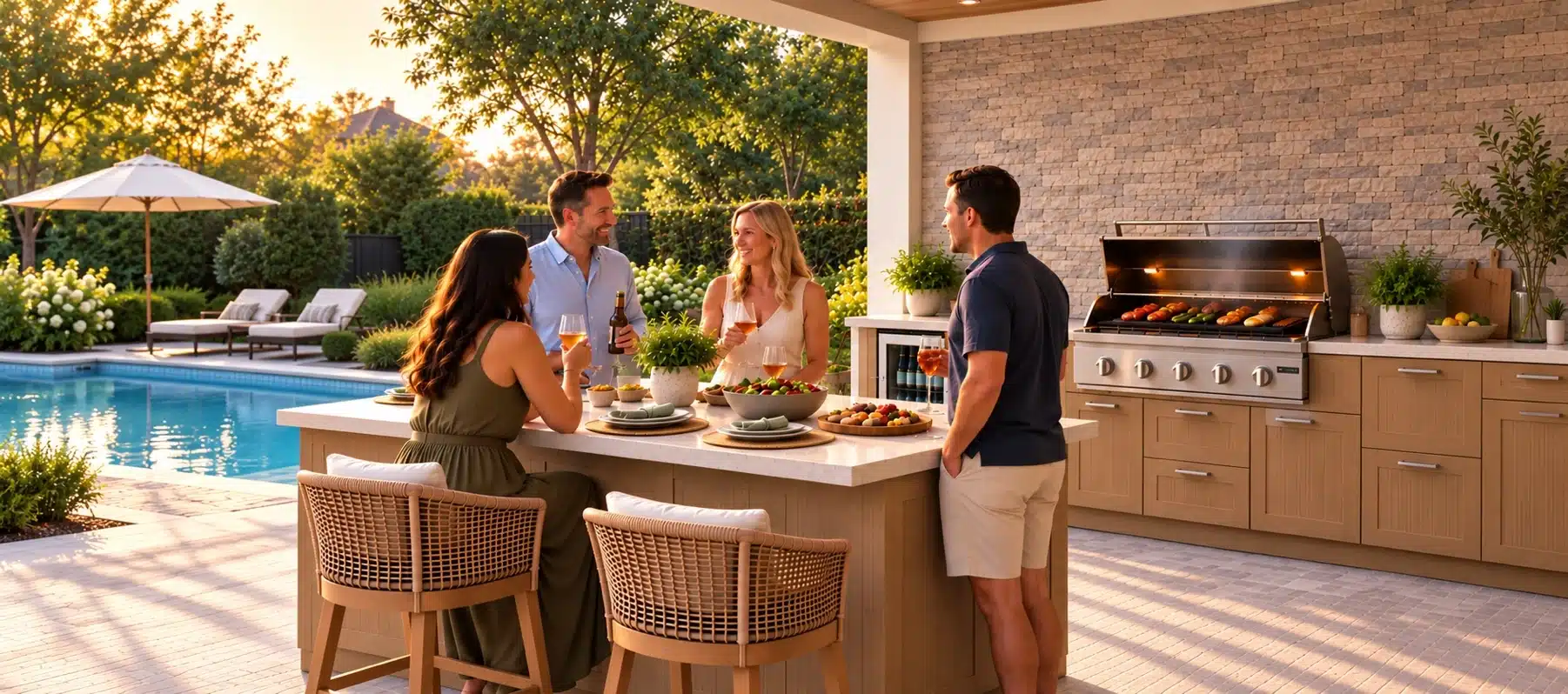


Outdoor kitchens have evolved from simple grill stations into fully integrated living environments with staples like outdoor kitchen cabinets. In high-end residential design, cabinetry is no longer an accessory; it is the structural and functional foundation that determines how an outdoor kitchen performs, ages, and integrates with surrounding hardscapes. For homeowners, designers, and outdoor living professionals alike, understanding the role of outdoor kitchen cabinets is essential to creating spaces that feel cohesive, intentional, and built for long-term use.
Key Takeaways
- Outdoor kitchen cabinets are the structural and functional foundation of a luxury outdoor kitchen, not just added storage.
- Exterior-rated cabinetry should be selected based on real outdoor conditions such as UV exposure, moisture, temperature swings, and ventilation needs.
- Material choice matters because stainless steel, aluminum, marine-grade polymers, and engineered composites each perform differently depending on climate and exposure.
- High-end outdoor kitchens work best when cabinetry is integrated with hardscape, circulation, appliances, and gathering areas for a cohesive layout.
- Long-term value comes from professional installation, proper anchoring, drainage planning, and cabinetry designed for durability and lower maintenance over time.
Why Cabinetry Is the Foundation of Outdoor Kitchens
Exterior-rated outdoor kitchen cabinets account for:
- Thermal expansion and contraction
- Moisture management and ventilation
- UV exposure
- Surface durability
- Structural anchoring to exterior substrates
These considerations directly affect long-term performance, appearance, and maintenance requirements for outdoor cabinets, especially in beach or pool areas.
Material Selection and Long-Term
Material selection is one of the most critical decisions in outdoor kitchen design. Designers and specifiers evaluate cabinetry systems based on how well materials perform under sustained exposure rather than short-term aesthetics alone.
Common materials for outdoor kitchen cabinets:
- Stainless steel systems designed for exterior use
- Aluminum-based cabinet structures
- Marine-grade polymers and engineered composites
Each option carries different advantages depending on climate, proximity to water, sun exposure, and design intent. The most successful outdoor kitchens align material selection with environmental realities rather than trends alone.
Cabinetry defines how an outdoor kitchen functions day to day.
- It dictates the prep flow, storage efficiency, appliance integration, and how the space visually connects to patios, seating areas, and landscape elements.
- In luxury outdoor environments, cabinets are not treated as standalone furniture. They are part of the architectural system anchored to hardscape, aligned with circulation paths, and designed to support appliances and surfaces without compromise.
- Outdoor kitchens have evolved from simple grill stations into fully integrated living environments. In high-end residential design, cabinetry is no longer an accessory; it is the structural and functional foundation
When cabinetry is treated as an afterthought, outdoor kitchens often feel disjointed or temporary. When it is treated as infrastructure, the entire space elevates.
Design Outdoor Kitchen Cabinets for Environments, Not Indoor Assumptions

Outdoor kitchens operate under conditions that indoor cabinetry is never designed to withstand. Exposure to sunlight, moisture, temperature swings, airborne debris, and humidity requires materials and construction methods engineered specifically for exterior use.
Integrating Outdoor Kitchen Cabinets with Hardscape and Layout
In well-designed outdoor kitchens, cabinetry aligns seamlessly with surrounding hardscape elements. Cabinet heights correspond with seat walls and counters. Finishes complement stone, concrete, or porcelain surfaces. Layouts support natural movement between cooking, dining, and gathering zones.
Designers often treat the outdoor kitchen as an extension of the patio rather than a separate feature. This approach creates visual continuity and enhances how the space is used during events and in everyday life.
When cabinetry is properly integrated, the outdoor kitchen feels permanent, balanced, and intentional.
Appliance Coordination and Functional Layout
Outdoor cabinet systems play a critical role in how appliances are installed and perform. Proper clearances, ventilation, and material compatibility protect appliances from heat transfer and moisture exposure.
Functional layouts prioritize:
- Efficient prep zones
- Safe appliance spacing
- Clear circulation paths
- Logical storage placement
Rather than forcing cabinets to adapt to appliances on site, professional-grade systems are designed to support appliances by design.
Installation and Professional Execution
Long-term performance depends not only on materials but also on how cabinetry is installed. Substrate preparation, drainage planning, anchoring methods, and alignment all influence durability.
This is why many designers and retailers prefer cabinet systems engineered for professional installation. Purpose-built systems reduce on-site modification, improve consistency, and minimize risk over time.
Value Beyond Aesthetics

Premium outdoor kitchen cabinets are an investment in longevity, usability, and architectural cohesion. While initial costs may be higher than entry-level alternatives, long-term value is realized through reduced maintenance, better performance, and a space that continues to function and look intentional year after year.
For homeowners, this means confidence. For designers and dealers, it means fewer callbacks and stronger project outcomes.
Building Outdoor Kitchen Cabinets That Endure
Luxury outdoor kitchens succeed when every component supports the whole. Cabinetry sits at the center of that equation structurally, visually, and functionally.
By choosing exterior-rated outdoor kitchen cabinet systems designed for long-term outdoor performance and professional integration, outdoor kitchens move beyond trends and become enduring living spaces.
FAQS on Exterior Kitchen Cabinets
Luxury outdoor kitchen cabinetry is engineered specifically for year-round exterior exposure rather than adapted from indoor products. Fortiva outdoor cabinetry combines an outdoor-engineered cabinet material, a UV-rated finish system, and 316 stainless steel salt powder-coated hardware to deliver premium performance while complementing high-end residential architecture. Professional installation and thoughtful design help ensure lasting beauty, durability, and functionality.
Fortiva cabinets are manufactured using a proprietary outdoor-engineered cabinet material selected for dimensional stability and long-term durability in demanding outdoor environments. Combined with a UV-rated finish system and corrosion-resistant 316 stainless steel salt powder-coated hardware, the complete cabinet system is designed to perform through changing weather conditions while maintaining a refined appearance.
Fortiva offers four distinctive door styles—Tela, Brezza, Filo, and Puro—allowing homeowners and designers to match cabinetry to contemporary, transitional, or timeless architectural styles. Combined with ten curated finishes, the collection provides exceptional design flexibility while maintaining the performance characteristics required for premium outdoor living spaces.
Fortiva offers a curated palette of ten designer finishes developed for outdoor applications. Each finish is protected by a UV-rated finish system that helps preserve color consistency and surface appearance despite prolonged sun exposure. Choosing the appropriate finish allows homeowners to coordinate cabinetry with countertops, flooring, and surrounding architectural materials.
A professionally designed outdoor kitchen can enhance both everyday enjoyment and long-term property appeal. Premium cabinetry, integrated appliances, and cohesive architectural design contribute to an outdoor living space that complements the home. Fortiva cabinetry combines sophisticated aesthetics with engineered outdoor performance, making it an excellent choice for high-end residential projects.
Fortiva provides a versatile cabinet system designed to support a wide variety of outdoor kitchen layouts. Authorized Fortiva dealers use CAD planning to coordinate cabinet configurations, appliance integration, utilities, and site conditions, creating a solution tailored to the project while maintaining proper installation requirements and warranty eligibility.
Fortiva cabinetry is designed to integrate with many leading outdoor grills, refrigeration units, side burners, and storage accessories. During project planning, authorized dealers coordinate appliance specifications, ventilation, utilities, and installation clearances so the finished outdoor kitchen functions as a unified system while meeting manufacturer requirements.
Fortiva combines engineering, architectural design, and premium materials into a complete outdoor cabinet system. Features including an outdoor-engineered cabinet material, UV-rated finish system, 316 stainless steel salt powder-coated hardware, adjustable leveling legs, ten curated finishes, four distinctive door styles, and the Fortiva Lifetime Limited Carcass Warranty distinguish the brand within the luxury outdoor living market.
Routine maintenance helps preserve the appearance and long-term performance of outdoor cabinetry. Fortiva recommends periodically cleaning cabinet surfaces, rinsing away environmental contaminants, inspecting hardware, and following published care guidelines. These simple maintenance practices help protect finishes and hardware while supporting years of dependable outdoor performance.
Architects, landscape designers, and builders appreciate products that combine design flexibility with dependable performance. Fortiva offers coordinated finishes, multiple door styles, engineered outdoor materials, professional planning resources, and installation guidance that simplify specification while delivering the premium appearance expected in luxury outdoor living environments.