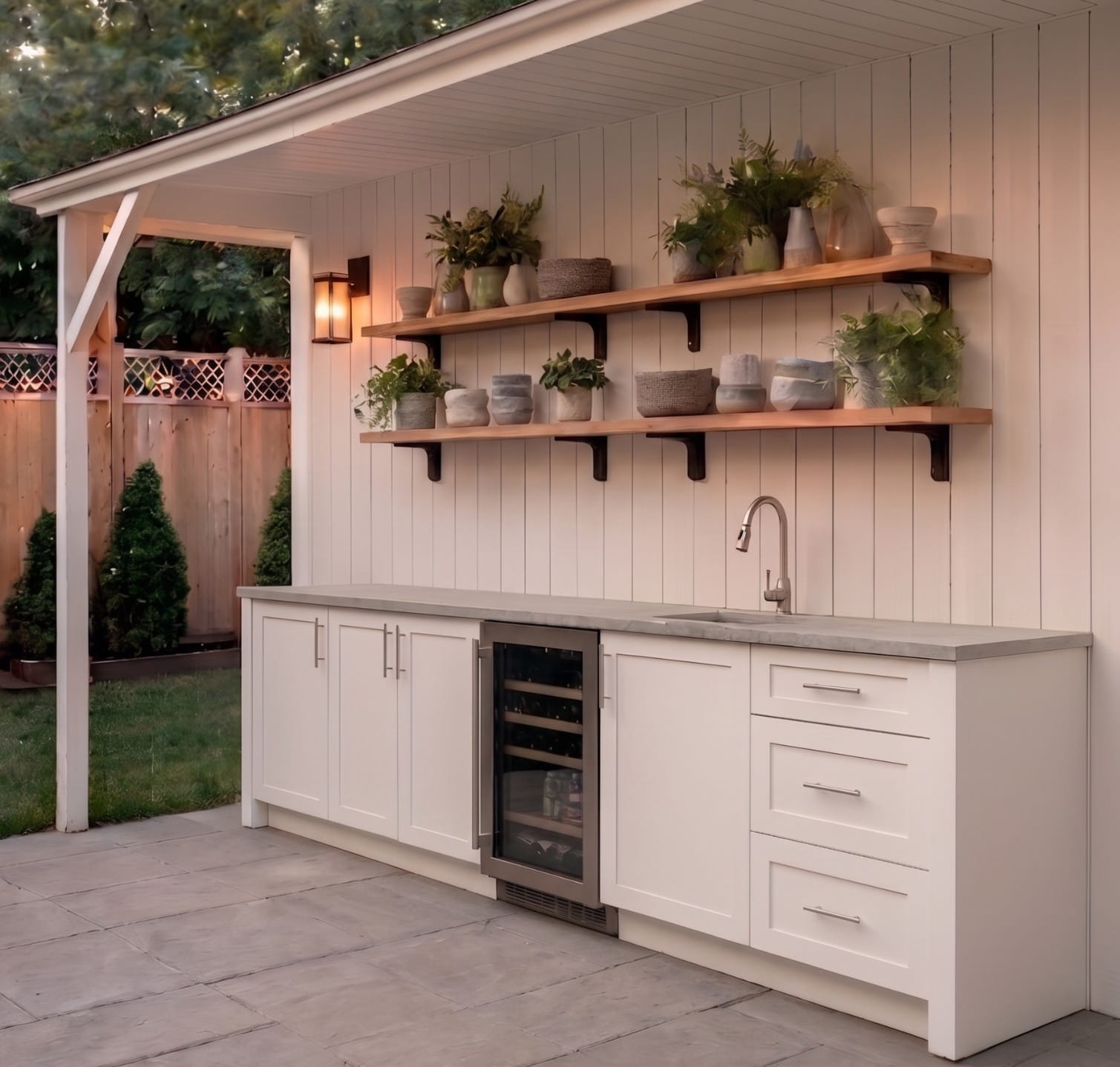


A sink is one of the highest-value additions to an outdoor kitchen. It means you can rinse produce, fill pots, and clean up without walking back inside, which is the difference between a kitchen you cook in and a grill you stand next to. But a sink is also the one element that brings plumbing into the picture, so it needs more planning than a grill or a storage cabinet. This guide covers how to size the sink cabinet, plan the plumbing and drainage, and prepare for cold weather, with specific Fortiva sink cabinet sizes to make each step straightforward. Fortiva sink cabinets come in 18, 21, 24, 30, and 36 inch widths with built-in conduit points for plumbing, so the run stays clean and the water lines have a clear path.
Do you need a sink in your outdoor kitchen?

Not every outdoor kitchen needs a sink, so it is worth deciding deliberately rather than adding one by default.
A sink makes sense if you:
- Cook full meals outside rather than just grilling
- Entertain often and want to keep prep and cleanup outdoors
- Have the kitchen far enough from the indoor kitchen that trips inside are a hassle
- They are already running plumbing to the area for other reasons
You might skip the sink if:
- The kitchen is a compact grilling station where space is tight
- The indoor kitchen is just steps away
- You want to avoid the cost and complexity of running water and drainage
In a compact footprint, the sink competes with prep and storage for space, so it is often the first thing to cut. In a larger kitchen, it is one of the first things to include.
Sizing the sink cabinet

The sink cabinet is a base cabinet built to house a sink and the plumbing beneath it. Getting the size right is the first decision.
Fortiva sink cabinets come in five widths:
- 18-inch and 21-inch for compact kitchens where the sink is a secondary feature
- 24 inches is the most common all-purpose size, fitting a standard bar or prep sink comfortably
- 30-inch and 36-inch for larger kitchens or a single deep basin where you want room to fill big pots and clean sheet pans
Match the cabinet width to the sink and the way you cook. A rinse-and-prep sink for produce and hands does fine in an 18- to 24-inch cabinet. If the outdoor kitchen is where you do real cleanup, a 30- or 36-inch cabinet with a larger basin earns its space.
Because Fortiva cabinets are pre-sized, the sink cabinet drops into the run alongside the base, grill, and appliance cabinets at a matching height and depth. Hence, the countertop stays continuous, and the sink sits where you want it.
Planning the plumbing

Plumbing is what separates a sink from every other cabinet in the kitchen, and it is the part homeowners most often underestimate. There are three connections to plan.
- Water supply. Most outdoor sinks have a cold-water line, which is enough for rinsing, prep, and cleanup. A hot water line is possible, but it adds cost and complexity, since it means either running a line from the house water heater or adding a local heater. Decide early, because it affects how the supply lines are stubbed in.
- Drainage. The used water has to go somewhere. Depending on local code and the setup, drainage runs to the home’s sewer or septic line, to a dedicated dry well, or, in the simplest cases, to a gray-water discharge where permitted. This connection is most likely governed by local code, so it is worth confirming the requirements before the build.
- Conduit routing. The supply and drain lines need a clean path into and out of the cabinet. Fortiva sink cabinets include built-in conduit points so the plumbing routes through the cabinetry rather than being surface-run, which keeps the finished kitchen looking intentional.
Because plumbing touches code, permits, and the home’s existing systems, it is coordinated during the design stage with the dealer and the plumber, rather than improvised on-site. Planning the supply, drain, and conduit routing before the pad is poured avoids the most expensive mistakes.
Drainage and the substrate
Even beyond the sink drain itself, an outdoor kitchen with a sink needs to handle water well. The substrate under the cabinets should be level and graded so that any water from the sink, rain, or cleaning drains away from the cabinet run rather than pooling at the base.
Fortiva cabinets include adjustable leveling legs with a 2.5-inch vertical range, which keep the cabinet body up off the base and allow the installer to set a true level even on a substrate that is graded to drain. The leveling legs and the graded substrate work together: the grade moves water away, and the legs keep the cabinet clear of it.
Cold-climate considerations

If your outdoor kitchen is in a climate that freezes, the sink plumbing needs a winter plan. Water left in the supply and drain lines can freeze, expand, and crack the plumbing.
The standard approach is to install shutoff valves on the outdoor water lines and drain them before the first hard freeze. Blowing out the lines with compressed air is the most thorough method. Your plumber sets this up during installation so that winterizing is a simple seasonal task rather than a repair waiting to happen.
The cabinetry itself handles the cold fine. Fortiva cabinets are engineered to move through freeze-thaw cycles without stressing the joinery or the finish. It is the water in the plumbing, not the cabinet, that needs the seasonal attention.
Choosing the sink and faucet
A few practical notes on the fixtures themselves, which the dealer and plumber coordinate with the cabinet.
- Sink material. Outdoor sinks are typically stainless steel, which handles the elements well. Whatever the material, it should be rated for outdoor use so it does not corrode or discolor.
- Faucet. Choose a faucet rated for outdoor use, and in freezing climates, one that can be drained for winter. A pull-down or high-arc faucet makes filling pots and rinsing easier.
- Basin depth. A deeper basin contains splash and fits larger cookware, which matters more outdoors, where you may be cleaning grill grates and sheet pans.
Fortiva does not sell the sink or faucet. The dealer helps select fixtures that fit the sink cabinet and coordinates the installation, so the basin, faucet, and plumbing all work together within the cabinet you have chosen.
Where the sink fits in the layout

The sink works best positioned between the prep zone and the grill, so you can move from rinsing to prepping to cooking without crossing your own path. In an L- or U-shape, the sink often anchors one leg, while the grill anchors the other. In a straight run, it sits beside the prep space next to the grill cabinet.
For compact kitchens, our small outdoor kitchen ideas guide shows how a 24-inch sink cabinet fits into a run under 8 feet. For a full walkthrough of how the zones fit together, see the outdoor kitchen layouts guide.
Working with a dealer on the sink
Because the sink brings plumbing, code, and drainage into the project, it is the element where dealer and trade coordination matters most. A Fortiva dealer will size the sink cabinet to your chosen sink, mark the supply, drain, and conduit routing on the CAD layout so the plumber knows exactly where to stub in, and coordinate the finished result so the plumbing is hidden and the run looks clean.
Fortiva is available through authorized dealers across the 48 contiguous United States. To plan an outdoor kitchen with a sink, contact us, and we will connect you with a dealer in your area.
Frequently asked questions
Can you put a sink in an outdoor kitchen?
Yes. A sink is one of the most useful additions to an outdoor kitchen, letting you rinse, prep, and clean up without going inside. It requires more planning than other cabinets because it involves a water supply, drainage, and, in some cases, local code requirements, but it is a standard part of a well-equipped outdoor kitchen. Fortiva sink cabinets come in five widths, from 18 to 36 inches, with built-in conduit points to route plumbing cleanly.
How does an outdoor kitchen sink drain?
Depending on local code and the setup, an outdoor sink drains to the home’s sewer or septic line, to a dedicated dry well, or, in some cases, to a permitted gray-water discharge. Drainage is the connection most often governed by local code, so the requirement should be confirmed before the build. A Fortiva dealer marks the drain routing on the layout so the plumber can stub it in correctly during the install.
Do outdoor kitchen sinks need hot water?
Not necessarily. Most outdoor sinks have a cold-water line, which handles rinsing, prep, and cleanup. A hot water line is possible, but it adds cost and complexity, since it means running a line from the home’s water heater or adding a local heater. Decide early, as it affects how supply lines are planned. Many homeowners find that a cold-only outdoor sink meets their needs.
What size cabinet do I need for an outdoor kitchen sink?
It depends on the sink and how you cook. Fortiva sink cabinets come in 18-, 21-, 24-, 30-, and 36-inch widths. An 18- to 24-inch cabinet suits a rinse-and-prep sink, with 24-inch being the most common all-purpose size. A 30- or 36-inch cabinet suits a larger basin for real cleanup, filling big pots, and washing sheet pans. Your dealer matches the cabinet width to your chosen sink.
How do you winterize an outdoor kitchen sink?
In freezing climates, install shutoff valves on the outdoor water lines and drain them before the first hard freeze, ideally blowing the lines out with compressed air. Choose a faucet that can be drained for winter. Your plumber sets this up during installation, so winterizing is a simple seasonal task. The Fortiva cabinet itself handles freeze-thaw cycles without issue; it is the water in the plumbing that needs the seasonal attention.
Where should the sink go in an outdoor kitchen layout?
Position the sink between the prep zone and the grill so you can move from rinsing to prepping to cooking without crossing your path. In an L- or U-shape, the sink often anchors one leg, while the grill anchors the other. In a straight run, it sits beside the prep space next to the grill cabinet. A Fortiva dealer helps place it based on your specific layout and how you cook.
Are outdoor kitchen sink cabinets weather-resistant?
Fortiva sink cabinets are built from the same proprietary material engineered for outdoor exposure as the rest of the line, finished with a system rated for UV and humidity. The cabinet handles rain, sun, and freeze-thaw cycles. The plumbing inside is what needs seasonal attention in cold climates, which is a matter of draining the lines before winter rather than anything to do with the cabinet.