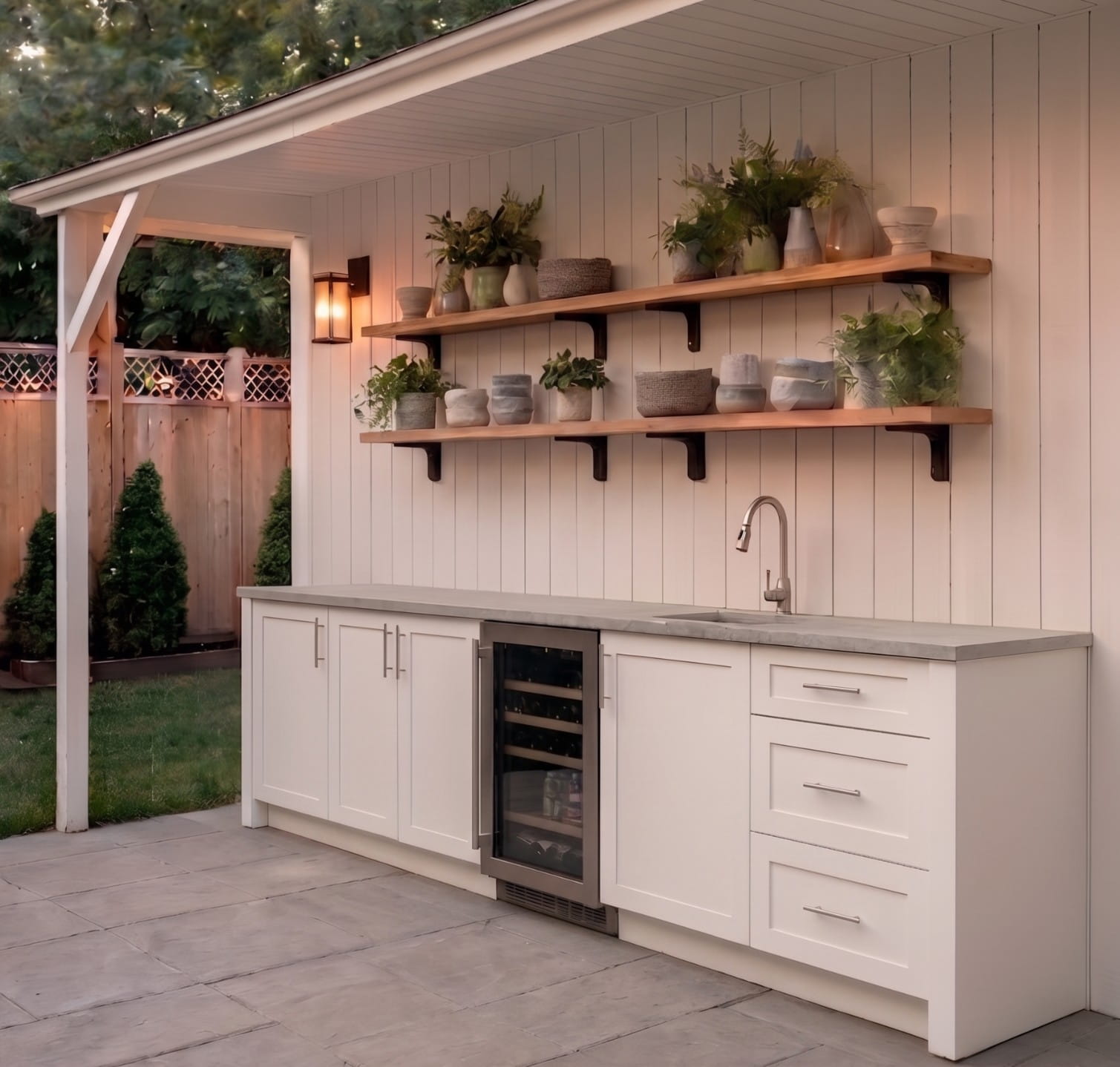


Outdoor kitchens are no longer an afterthought. For high-end homes, they are central to how people gather, host, and move through a space. The difference between a functional setup and an exceptional one comes down to one thing: outdoor kitchen cabinet layout.
A well-designed outdoor cabinet layout does more than organize appliances. It controls flow, supports entertaining, and ensures long-term durability in an outdoor environment.
Key Takeaways on Outdoor Cabinet Layout Ideas
- Layout determines usability, not just appearance
- Cabinet placement directly impacts flow and entertaining
- Exterior-rated materials are essential for performance
- Thoughtful outdoor kitchen zoning improves both function and experience
Why Does Outdoor Kitchen Design Layout Matter More Than Indoor Spaces?
Indoor kitchens rely on predictable conditions. Outdoor kitchens do not.
Layouts must account for:
- Weather exposure and drainage
- Ventilation and heat from grills
- Traffic flow across patios and pools
- Multi-user functionality during gatherings
A poor layout creates bottlenecks and limits usability. A strategic outdoor kitchen layout, such as recommendations by the National Kitchen and Bath Association, enhances both performance and experience.
The Most Effective Outdoor Kitchen Cabinet Layouts
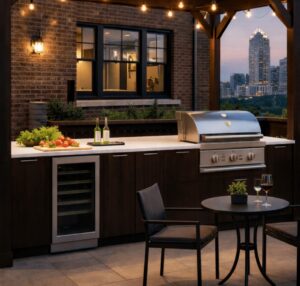

Linear Layout (Single Wall)
Best for:
- Smaller patios
- Secondary entertaining spaces
Key advantages:
- Simple installation
- Efficient use of limited space
Limitations:
- Reduced prep and storage zones
- Limited separation of cooking and serving
L-Shape Layout
Best for:
- Moderate entertaining
- Defined cooking and prep zones
Key advantages:
- Natural workflow between grill, prep, and storage
- Improved traffic flow
Design tip:
Position storage cabinets at the corner transition to maximize usability.
U-Shape Layout
Best for:
- High-end entertaining environments
- Dedicated outdoor kitchen spaces
Key advantages:
- Maximum storage and workspace
- Multiple users can operate simultaneously
Consideration:
Requires careful ventilation and spacing around heat sources.
Island-Centered Layout
Best for:
- Social, entertainment-first environments
Key advantages:
- Guests gather without interfering with cooking
- Creates a focal point for the space
Design tip:
Use base cabinetry to anchor the island and define zones.
Outdoor Kitchen Design for Flow and Movement

Outdoor kitchens must support movement between:
- Grill and prep areas
- Storage and serving zones
- Kitchen and adjacent seating areas
Best practices:
- Maintain clear walkways of at least 36–42 inches
- Separate hot zones from guest interaction areas
- Keep frequently used items within arm’s reach
Outdoor Kitchen Cabinet Placement Strategy
Cabinetry is not just storage. It defines how the kitchen functions.
Key placement rules:
- Place drawers near prep zones for utensils
- Position larger cabinets away from high-traffic paths
- Integrate trash and recycling discreetly
Materials and Environmental Considerations for Outdoor Kitchen Cabinet Layout
Outdoor cabinet layout must account for:
- Moisture exposure
- Sun exposure
- Temperature fluctuations
Using exterior-rated cabinetry ensures:
- Structural integrity
- Resistance to warping and swelling
- Long-term performance
Common Layout Mistakes to Avoid
- Overcrowding the space with cabinets
- Ignoring ventilation near grills
- Poor access to storage during active use
- Designing for aesthetics instead of function
FAQ on Outdoor Kitchen Cabinet Layout
What is the best outdoor kitchen layout for entertaining?
Island-centered and U-shape layouts offer the best balance of function and social interaction.
How much space do I need for an outdoor kitchen layout?
At a minimum, 10–12 feet of linear space. Larger layouts require 150–300 square feet.
Can outdoor cabinets be arranged like indoor kitchens?
No. Outdoor layouts must account for weather, ventilation, and traffic flow.
Start Designing Your Outdoor Kitchen Cabinet Layout
Make your outdoor kitchen the place everyone wants to gather. Fortiva helps dealers, builders, architects, and designers create cabinet layouts that look polished, work beautifully, and hold up outside.
Bring the right cabinetry into the plan early, design a space that flows naturally, and give clients an outdoor kitchen built for serious entertainment.