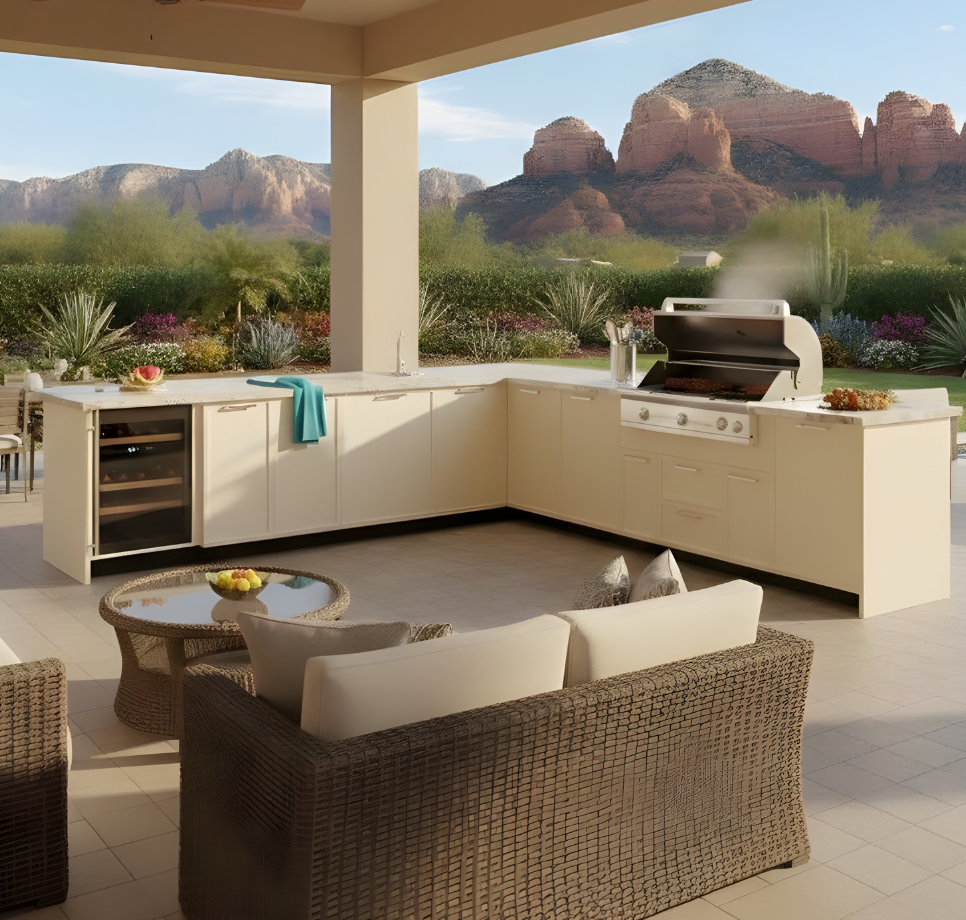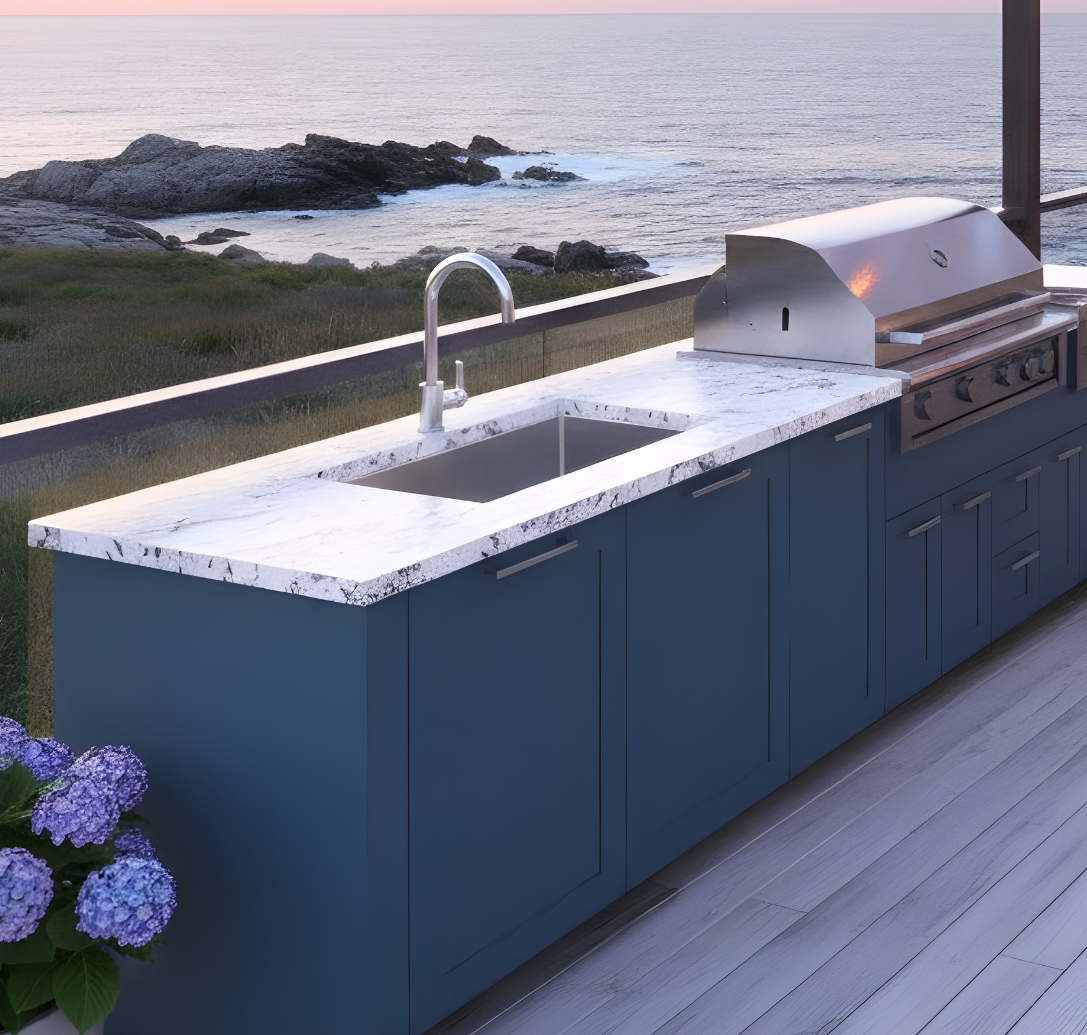

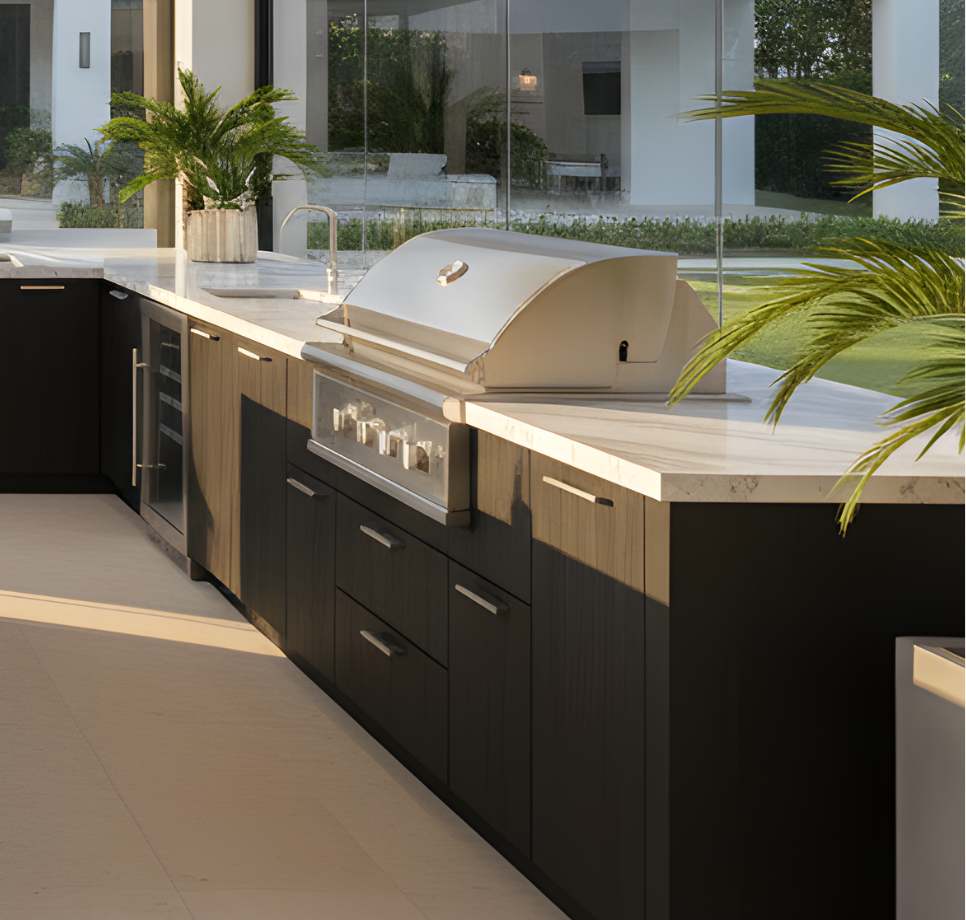
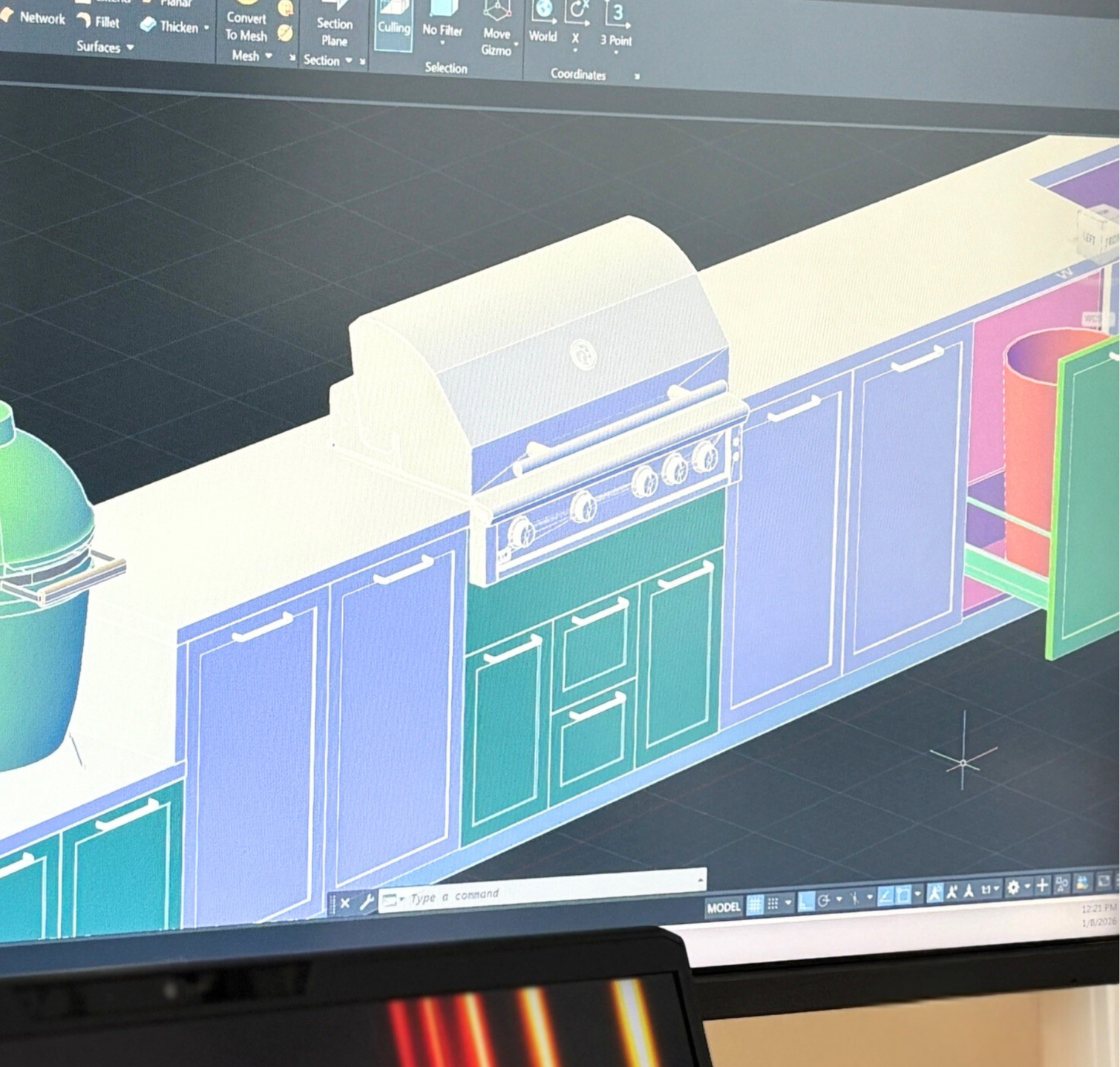
Designers often begin by defining:
- Primary gathering zones
- Circulation paths through the landscape
- Visual sightlines from the home and adjacent spaces
Once these elements are established, cabinetry layouts can reinforce movement, frame spaces, and support natural use patterns.
Establishing Spatial Hierarchy and Flow
In well-designed outdoor environments, the kitchen supports social interaction without dominating the space.
Cabinet placement helps define boundaries between cooking, dining, and lounging while maintaining visual openness.
Effective layouts consider:
- Clear walkways between zones
- Separation of active cooking areas from seating
- Sightlines that keep the cook engaged with guests
Cabinets often double as spatial dividers, helping organize the outdoor room without walls or barriers.
Aligning Cabinetry with Hardscape Materials
Material continuity is one of the strongest tools for creating cohesion.
Cabinet finishes should complement adjacent stone, concrete, porcelain, or decking materials rather than compete with them.
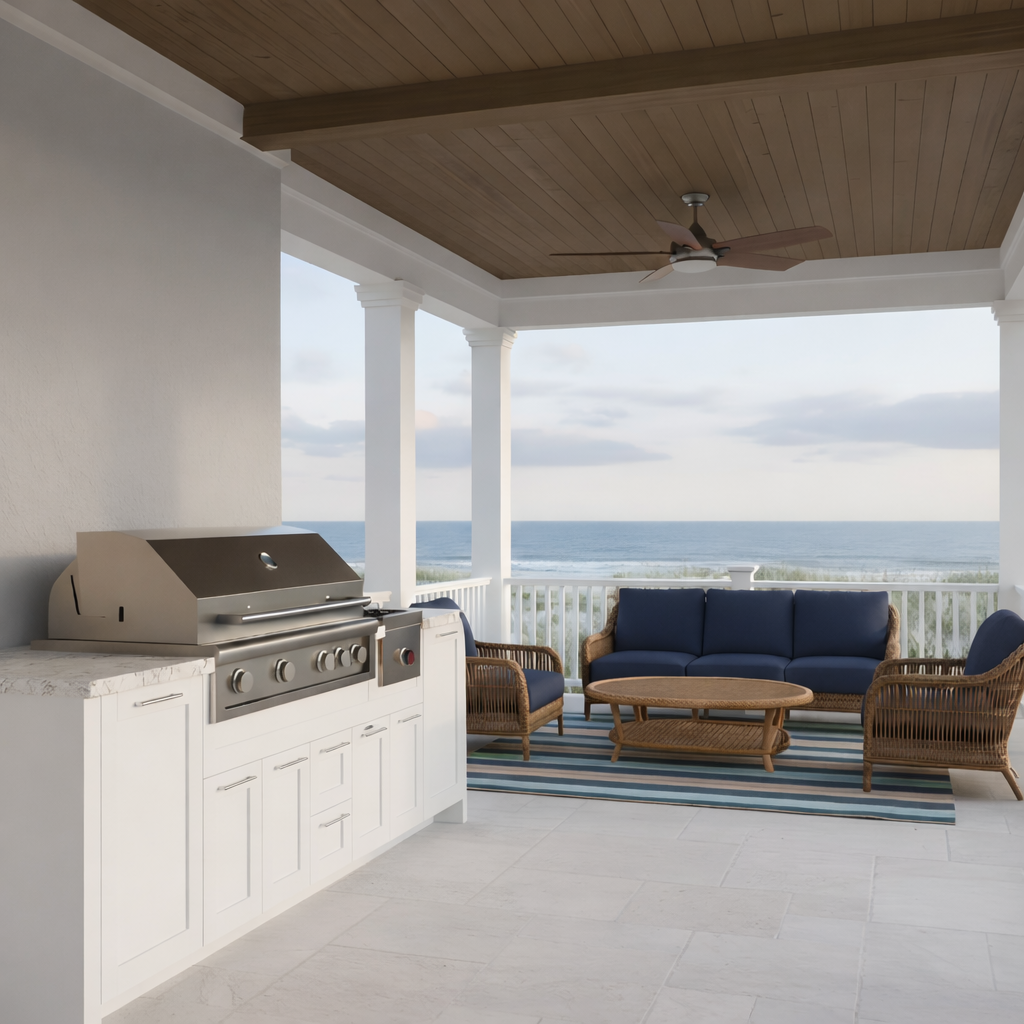
Designers frequently coordinate:
- Cabinet heights with seat walls or counters
- Finish tones with paving materials
- Linear cabinet runs with hardscape geometry
When cabinetry aligns visually and proportionally with hardscape, the outdoor kitchen feels grounded and intentional.
Structural Integration and Substrate Planning
Outdoor cabinetry interfaces directly with hardscape substrates, making early coordination critical. Designers evaluate how cabinets will be supported, anchored, and protected from moisture.
Key considerations include:
- Load-bearing capacity of the substrate
- Drainage and water flow at cabinet bases
- Transitions between cabinet systems and adjacent paving
Cabinet systems engineered for exterior environments simplify this coordination and reduce the need for field adjustments.
Designing for Exposure and Environmental Conditions
Hardscape design influences how cabinetry is exposed to sun, wind, and moisture. Pergolas, walls, plantings, and elevation changes all affect cabinet performance over time.
Designers often use landscape and architectural elements to:
- Provide shade during peak sun hours
- Shield cabinetry from prevailing winds
- Manage runoff and splash zones
These strategies enhance comfort while supporting long-term material performance.
Appliance Placement Within the Landscape
Appliance placement should feel natural within the broader outdoor environment. Grills, refrigeration, and prep zones must be accessible without disrupting circulation or crowding seating areas.
Cabinetry plays a central role in:
- Supporting appliance clearances
- Managing heat and service access
- Maintaining clean lines across the hardscape
When appliances and cabinets are coordinated early, the kitchen reads as part of the landscape architecture rather than an inserted utility zone.
Creating Permanence Through Design
One hallmark of luxury outdoor kitchens is a sense of permanence. Integrated cabinetry contributes to this by visually anchoring the kitchen to the site.
Design elements that reinforce permanence include:
- Flush alignment with hardscape edges
- Consistent material transitions
- Proportions that mirror architectural features of the home
These details help outdoor kitchens age gracefully alongside the landscape.
Collaboration Across Disciplines
High-performing outdoor kitchens result from collaboration between designers, landscape architects, hardscape contractors, and cabinet specialists. Early coordination reduces the. Need for compromises later in the project.
Cabinet systems designed for professional installation allow teams to:
- Maintain design intent through construction
- Reduce on-site modification
- Deliver consistent results across projects
This level of coordination benefits both the client experience and long-term project outcomes.
Designing Outdoor Kitchens That Belong
Outdoor kitchens integrated with hardscape succeed when every element supports the whole. Cabinetry provides structure, organization, and continuity—linking appliances, surfaces, and circulation into a cohesive outdoor living environment.
By designing cabinetry, hardscape, and layout together, outdoor kitchens become lasting architectural features rather than temporary additions.