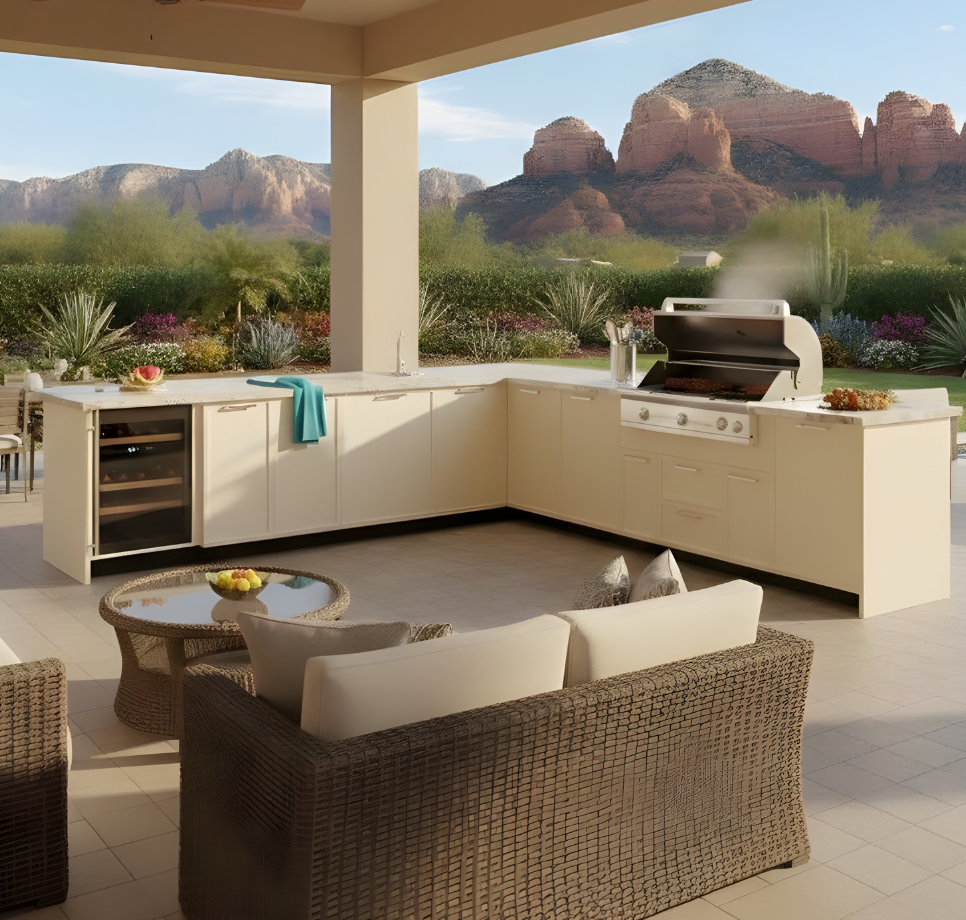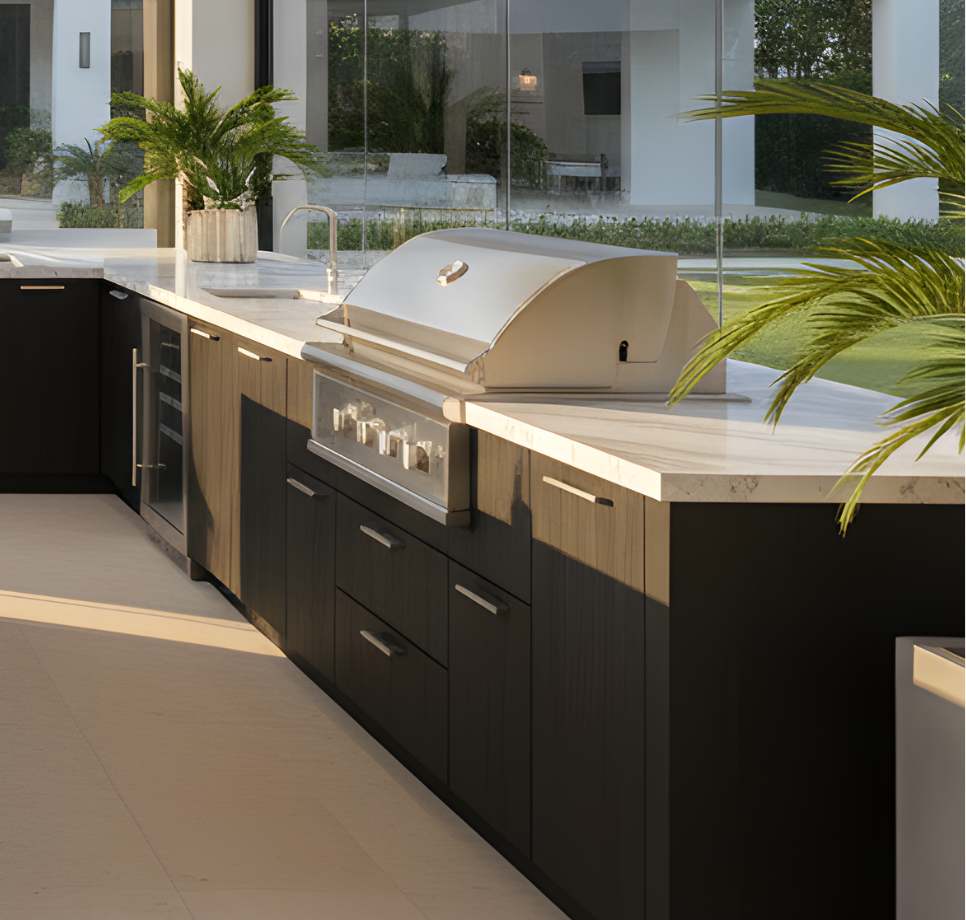

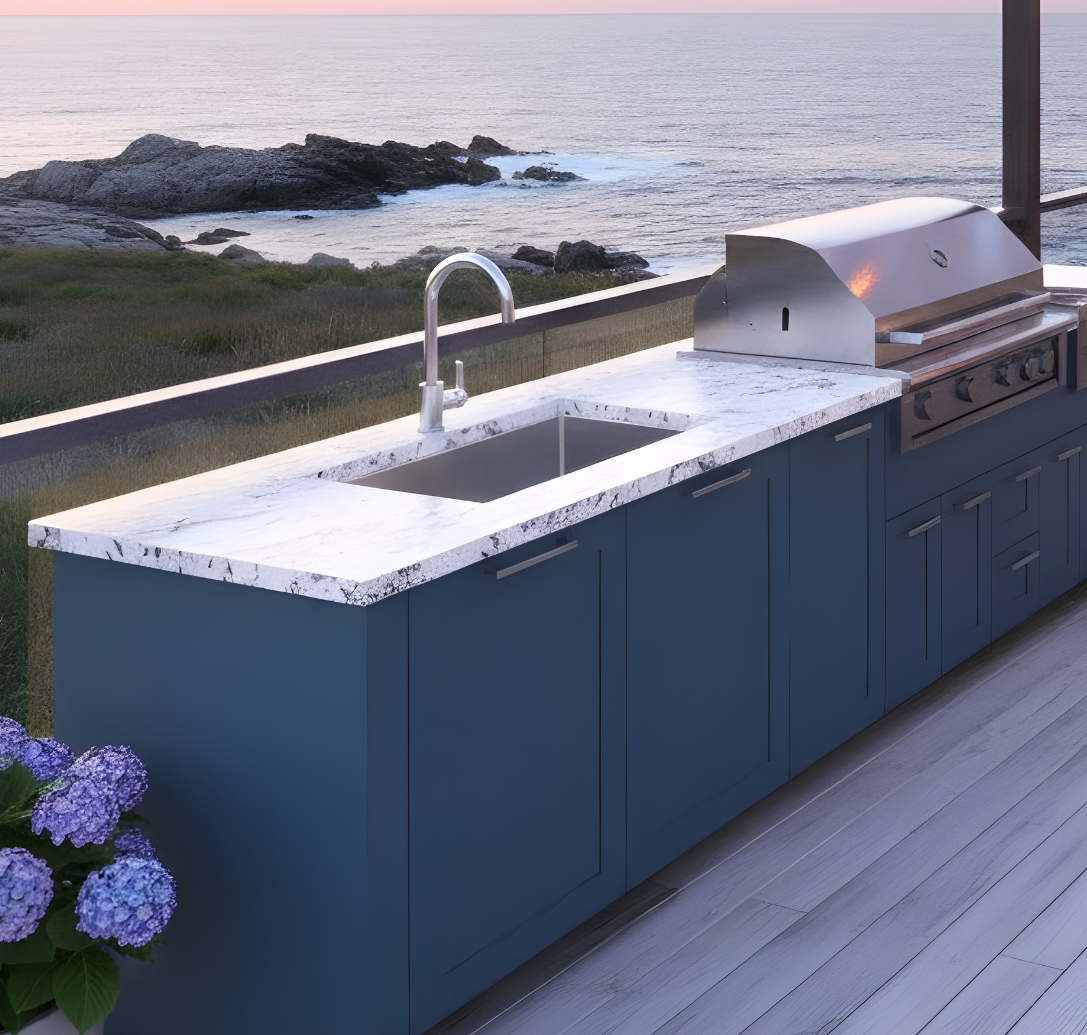
Outdoor kitchens are no longer peripheral amenities. In high-end residential design, they are architectural features that must perform reliably in exterior environments while integrating seamlessly with hardscape, appliances, and landscape elements.
For architects and designers, specifying outdoor kitchen cabinetry requires a different mindset than selecting interior millwork. Exterior conditions, material behavior, and installation variables all influence long-term success.
Start With Environmental Exposure, Not Aesthetics The first step in specifying outdoor cabinetry is understanding the site’s environmental conditions. Sun exposure, prevailing winds, moisture levels, proximity to pools or coastal environments, and seasonal temperature swings all affect material performance.

Designers typically assess:
- Direct vs. indirect sun exposure
- Humidity and rainfall patterns
- Freeze and thaw cycles
Airborne contaminants such as salt or debris
These factors inform material selection, cabinet construction, and detailing long before finishes are chosen.
Exterior-Rated Cabinet Systems vs. Adapted Indoor Cabinets
One of the most common points of failure in outdoor kitchens occurs when indoor cabinetry is adapted for exterior use. Outdoor kitchen cabinets must be engineered specifically for exterior environments, not modified after the fact.
Exterior-rated cabinet systems differ in:
- Core materials and structural components
- Fasteners and joinery methods
- Ventilation and moisture management
Tolerances for expansion and contraction
Specifying systems designed for outdoor use reduces long-term risk and simplifies coordination across trades.
Material Selection and Performance Criteria Material choice is central to outdoor cabinet performance. Architects and designers evaluate materials based on durability, maintenance requirements, and compatibility with the overall design language.
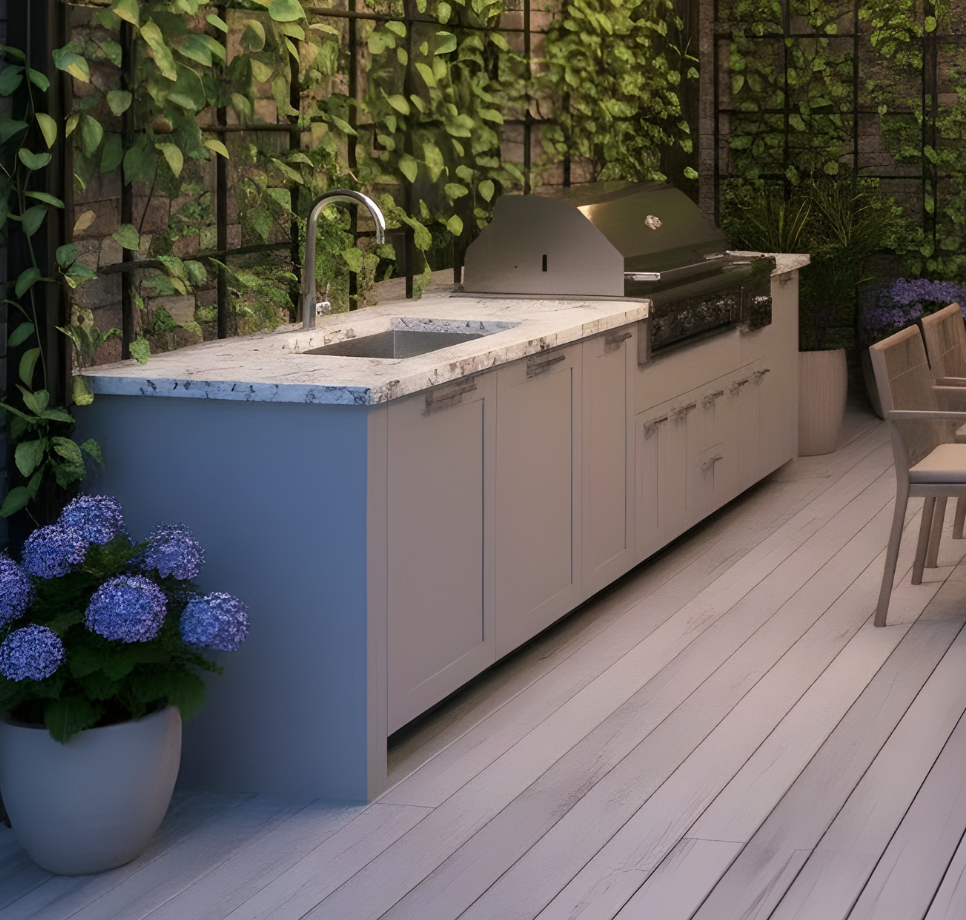
Commonly specified material categories include:
- Stainless steel systems designed for exterior exposure
- Aluminum-based cabinet structures
- Marine-grade polymers and engineered composites
Each material performs differently depending on the climate and application. The most effective specifications align material properties with environmental realities rather than relying solely on visual appeal.
Cabinet Ventilation and Moisture Management
Ventilation is a critical yet often overlooked component of outdoor cabinet design. Proper airflow helps manage moisture, reduces heat buildup, and supports appliance performance.
Designers should consider:
Integrated ventilation strategies within cabinet systems
Clearances around heat-generating appliances
Drainage paths that prevent water retention
Well-designed cabinet systems account for these factors inherently, reducing the need for field modifications.
Coordinating Cabinetry With Appliances
Outdoor appliances introduce heat, weight, and service access requirements that must be accommodated at the cabinetry level. Proper coordination ensures both performance and longevity.
Key considerations include:
Appliance clearances and manufacturer requirements
Heat transfer management
Service access for maintenance and replacement
Cabinet systems designed for outdoor kitchens support appliance integration without compromising structural integrity or finish durability.
Integration With Hardscapes and Structural Substrates
Outdoor cabinetry does not exist independently; it interfaces directly with hardscapes and structural substrates. Designers evaluate how cabinets will be anchored, leveled, and aligned with adjacent surfaces.
Successful specifications address:
- Substrate preparation and load-bearing capacity
- Drainage and water management at the base
- Alignment with patios, seat walls, and counters
Cabinet systems engineered for professional installation reduce variability and improve consistency across projects.
Code, Utilities, and Trade Coordination
Outdoor kitchens involve multiple trades, including gas, electrical, plumbing, and masonry. Early coordination reduces conflicts during construction.
Designers typically verify:
- Local code requirements for outdoor installations
- Appliance clearances and utility routing
- Structural considerations for built-in systems
Specifying cabinetry that accommodates these requirements simplifies coordination and protects the design intent.
Lifecycle Thinking and Long-Term Value
For professional specifiers, value is measured over time, not just at the time of installation. Cabinet systems engineered for exterior use offer advantages in durability, predictable maintenance, and long-term performance.
High-performance outdoor cabinetry supports:
- Reduced maintenance requirements
- Consistent appearance over time
- Fewer callbacks and warranty issues
These benefits matter to clients, builders, and design teams alike.
Designing Outdoor Kitchens with Confidence
Specifying outdoor kitchen cabinetry is about managing risk while delivering high-performing, cohesive designs. Exterior-rated cabinet systems designed for professional installation allow architects and designers to focus on creativity and integration rather than remediation.
When cabinetry is specified with environmental conditions, material behavior, and installation realities in mind, outdoor kitchens become enduring extensions of the built environment not temporary additions.